
- This event has passed.
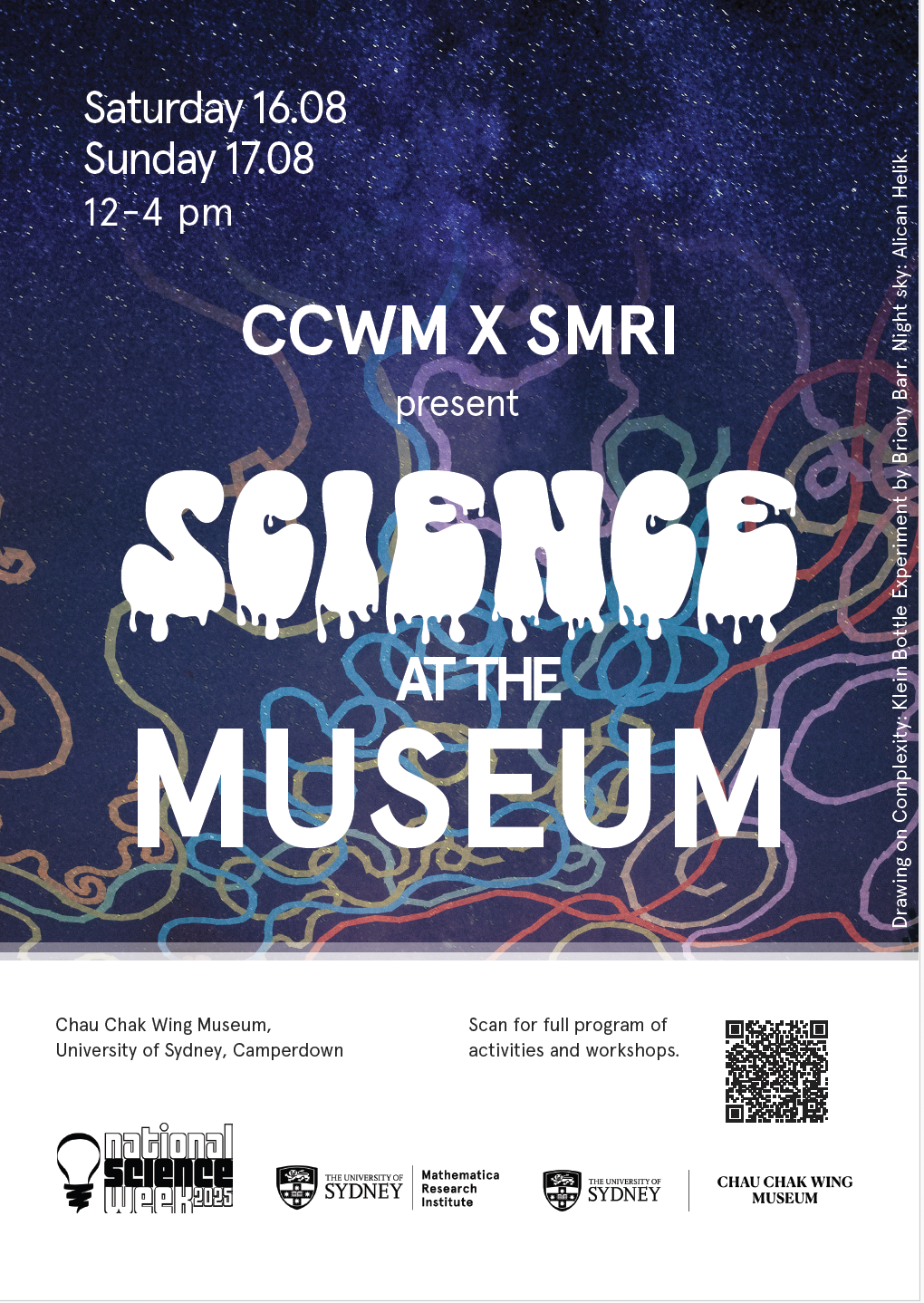
Science at the Museum
National Science Week 2025: Decoding the Universe – Exploring the unknown with nature’s hidden language
Saturday August 16 from 12 – 4pm
Sunday August 17 from 12 – 4 pm
To mark National Science Week, the Sydney Mathematical Research Institute (SMRI) and the Chau Chak Wing Museum (CCWM) are collaborating again on a stimulating weekend for the whole family in the museum at the University of Sydney!
This year’s theme of National Science Week is ‘Decoding the Universe – Exploring the unknown with nature’s hidden language’. Over the weekend, we will be delving into the hidden languages of nature – how do mathematics and sciences describe the world around us and allow us to push the boundaries of knowledge?
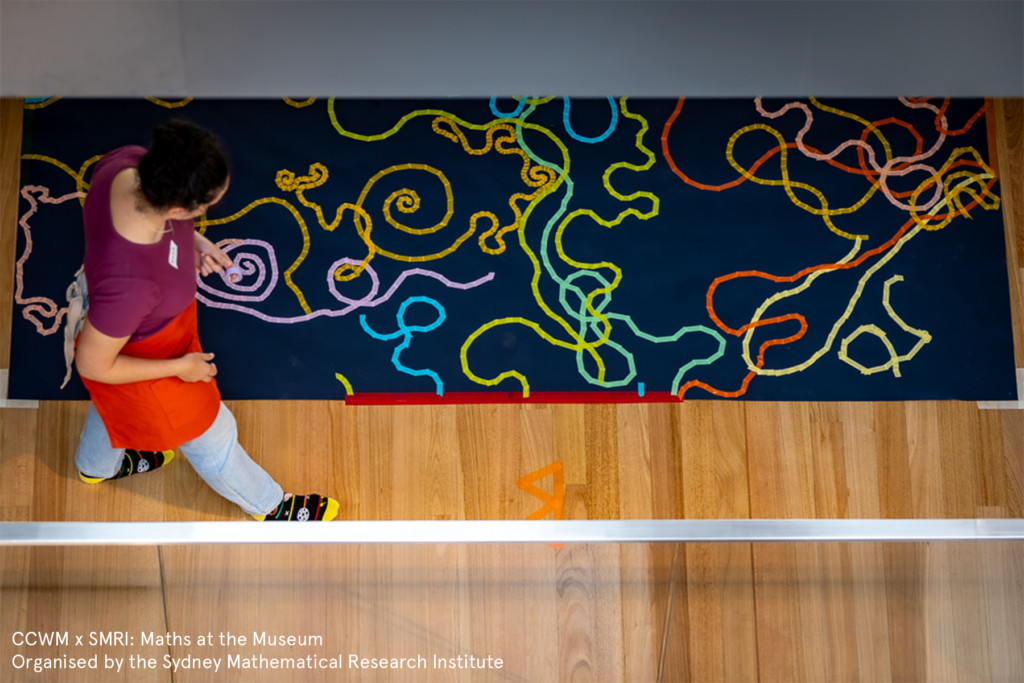
Joined by the Sydney Institute for Astronomy, we will be celebrating with a variety of activities and floor talks, culminating in an interdisciplinary panel exploring the theme. To explore how the rules of nature govern our world, join us to participate in Briony Barr’s Klein Bottle Experiment. This is a large-scale, collaborative artwork which uses rule-based play to visualise how participants interact with one another and our environment, using the hidden languages of the Universe!
Expert floor talks
Saturday 16th August
12:15 – 12:45 pm 2,000 years of twinkling
Emily Kerrison, Sydney Institute for Astrophysics (SIfA)
Twinkle twinkle little star, we know exactly what you are. Humans have been studying the stars for as long as we have looked up at the
night sky. But why do they twinkle? Do other objects in the night sky twinkle too? Come on a journey from Ancient Greece all the way to modern day Australia, as we follow a story of discovery about why things twinkle at night, and how this twinkling can be used to understand the world around us.
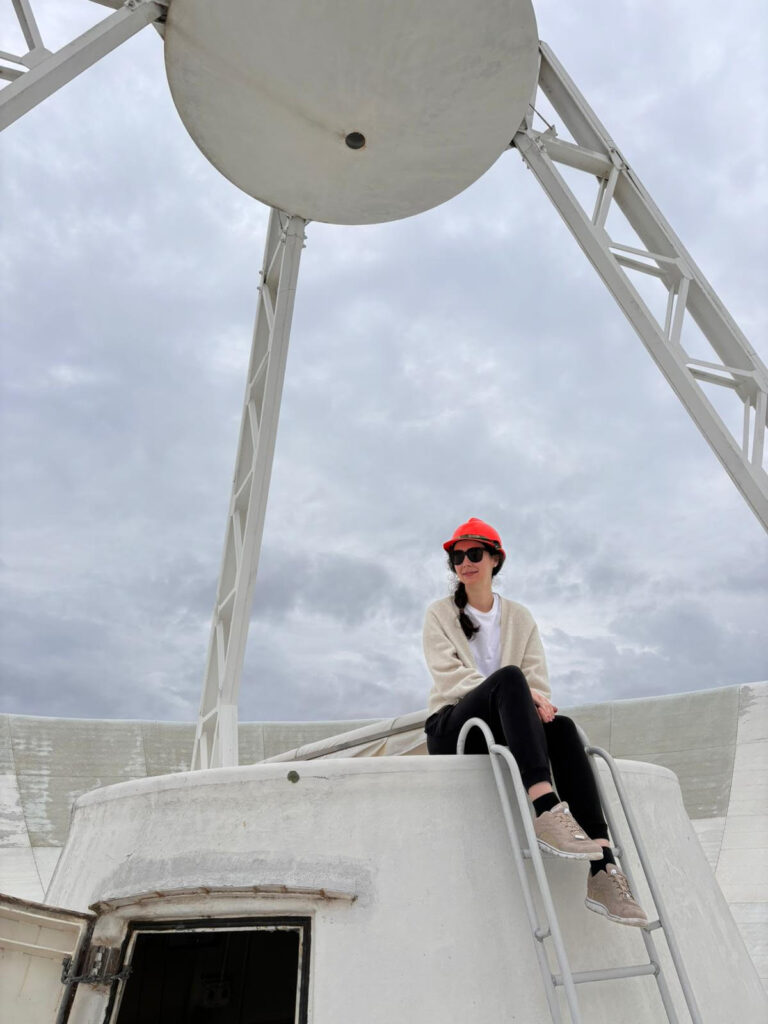
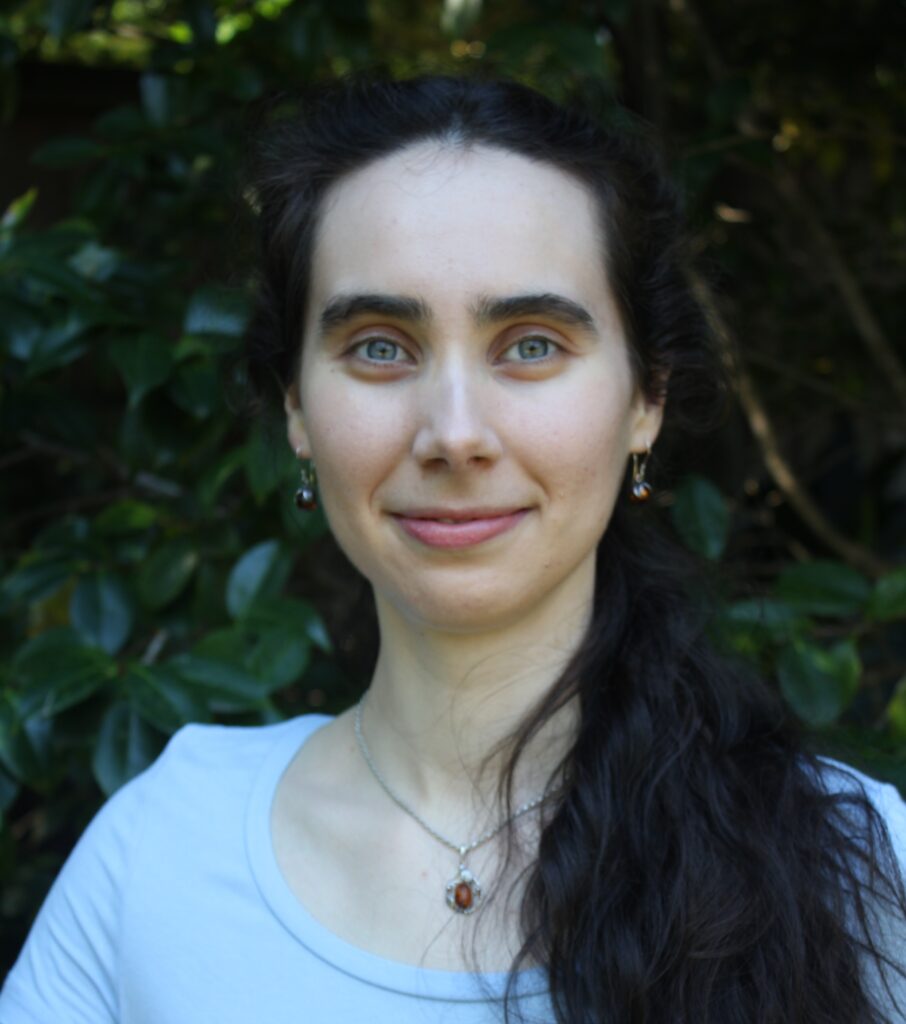
Emily is a PhD student in Astrophysics at the University of Sydney, with a background in both science and Classical literature. She is interested in
piecing together the stories of supermassive black holes from datasets taken all around the world, including right here in Australia. When I’m not
looking at black holes, I like thinking about how the way we do science has changed over the course of decades, centuries, and millennia.
1 – 1:30 pm Introducing Biodesign: applying science outside the lab
Phillip Gough, Design Lab and School of Life and Environmental Sciences
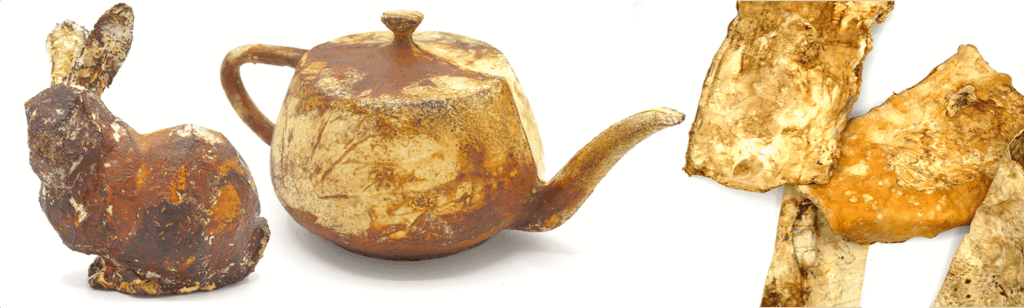
In the future, we will need to develop a circular economy. One that takes waste and turns it into something new, that has some value. For designers it’s important to select the best materials for circularity. Instead of materials that will last for centuries, materials should be able to be broken recycled or returned to the natural cycles. So why not work with Earth’s natural material recycling system, fungi!? This talk introduces biodesign, which applies the understanding of science to design challenges, and uses living organisms as partners to create a better, more sustainable, world.
1:45 – 2:15 pm How animal behavior can shape the environment in unexpected ways
Amelia Meier, Thriving Oceans Research Hub
This talk will explore how animal behavior can have large-scale impacts on the environment and how it can be studied using satellites and big data, with examples from Amelia’s research on species such as elephants and sharks. Understanding such behaviors helps conservationists better protect wildlife and their habitats.
2:30 – 3 pm Building huge radio telescopes (and finding tiny stars)
Kovi Rose, Sydney Institute for Astrophysics (SIfA)
We have entered the age of big data in astrophysics and radio astronomy is no exception. The Australian SKA Pathfinder (ASKAP) conducts
wide-field radio surveys of the southern skies. With millions of radio-bright sources in the survey regions we are using new polarisation
filtering and positional cross-matching, as well as more traditional
variability metrics, to identify interesting astronomical transients. From
stellar radio emission to late-time supernova re-brightening, I will speak
about some of the different objects we are finding with ASKAP, including the detection of periodic bursts from an ultracool brown dwarf star.
Kovi is an astrophysics PhD candidate and LSST Data Science Fellow at the University of Sydney who uses radio telescopes to study distant stars
that go snap, crackle, and pop. Outside of research, he spends most of his time communicating science through his writing, podcasting, and memes.
3:15 – 3:45 pm Journey to the beginning of the Universe
Ciaran O’Hare, Sydney Institute for Astrophysics (SIfA)
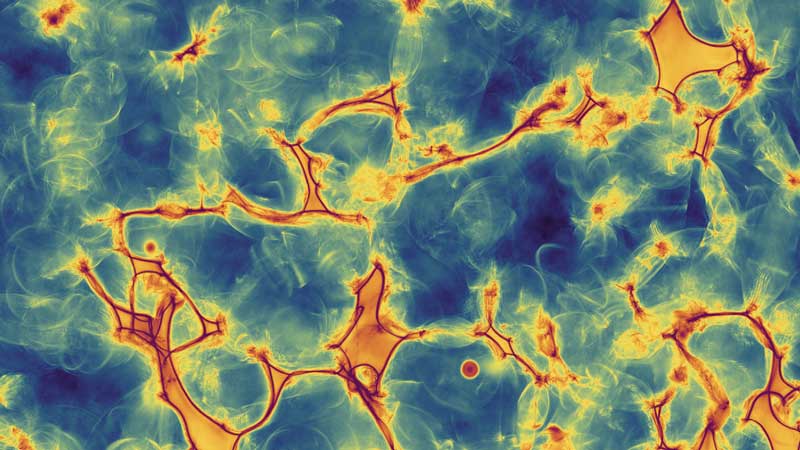
Where did everything we see around us come from? To figure this out we need to go back 13.8 billion years to when the primordial ingredients of our Universe were first forged. I will tell you what we do and do not yet understand about the Big Bang and how the fundamental constituents of nature were created.
Sunday 17th August
12:15 – 12:45 pm Visiting poems as if they were cities (and searching for an optimal route)
Katy Gero, School of Computer Science
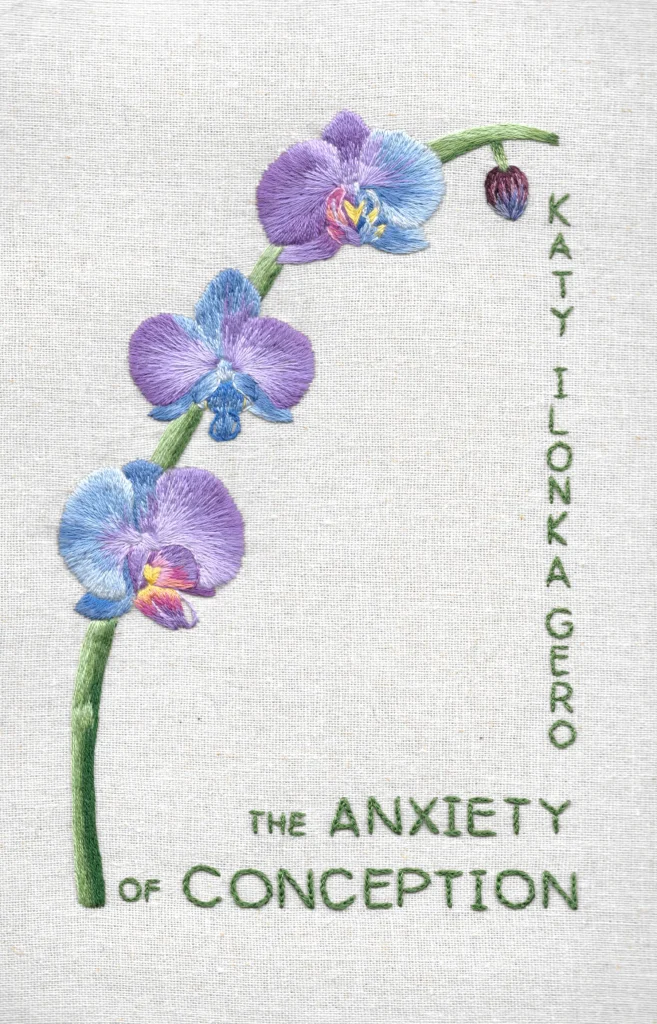
The Anxiety of Conception is a poetry book in which each copy of the book represents a unique tour through the poet’s memories. Written in the months leading up to and following the birth of the poet’s child, poems are ordered (and reordered) according to a “traveling salesman” algorithm. This talk will present the concept of the book and the maths used to order the poems.
Katy Ilonka Gero is a writer and human-computer interaction researcher. Her writing and poems have been published in Catapult, The HTML Review, Wired, and more. With Kyle Booten, she is the co-founder of Ensemble Park, a journal that collects literary experiments in human-computer co-writing. Her computer science research spans computational creativity, AI ethics, and the psychological impact of AI writing assistance. She is currently a Lecturer at the University of Sydney in the School of Computer Science.
12:50 – 1:10 pm Explainer: Drawing on Complexity
Briony Barr
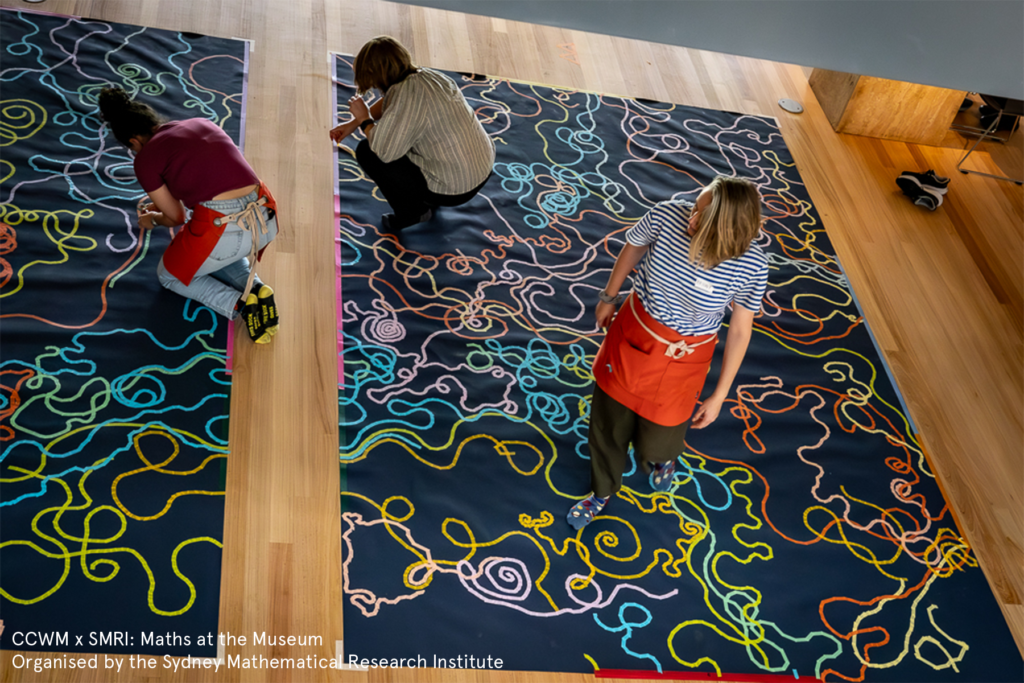
Over the weekend, visitors will contribute to a collaborative artwork by Brisbane-based artist Briony Barr using paper and washi tape. This body of work, ‘Drawing on Complexity’ uses rule-based drawing and social dynamics to model complex adaptive systems, and has been designed in collaboration with physicist Andrew Melatos.
1:15 – 1:45 pm Finding radio stars in a haystack of black holes
Laura Driessen, Sydney Institute for Astrophysics (SIfA)
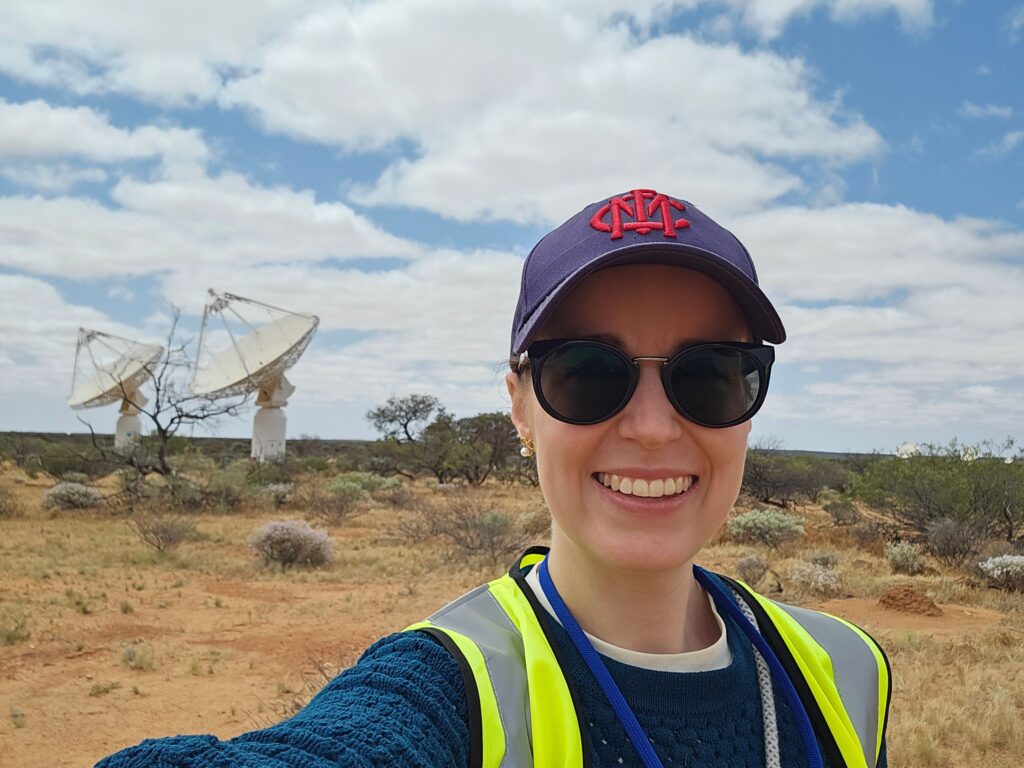
Did you know that black holes can photobomb stars? Hear about how we’ve more than doubled the known number of radio stars using Australia’s ASKAP telescope. Stars might seem easy to find, but it’s a lot trickier with black holes everywhere!
Laura Driessen is a radio astronomer and science communicator. She loves searching for hard-to-find things in the deluge of data they get from amazing radio telescopes, especially the telescopes right here in Australia. She is passionate about sharing the science and the cool astronomy being done right here in Australia. She is currently a Postdoctoral Research Fellow at the University of Sydney and Project Scientist of the Variables and Slow Transients (VAST) survey with ASKAP.
Interdisciplinary Panel: Decoding the Universe – Exploring the unknown with nature’s hidden language
2 pm – 3:30 pm
This panel brings together experts from across the sciences to explore the theme of National Science Week 2025. Join a lively discussion with Ana Vila Concejo (Geocoastal Research Group), Jean Yang (Sydney Precision Data Science Centre), Tony Wirth (School of Computer Science), and John Voight (Magma, Computational Algebra Group), moderated by Stephan Tillmann (Sydney Mathematical Research Institute).
Activities
Dive into the Magic of the Marine World (Saturday 12 – 4 pm)
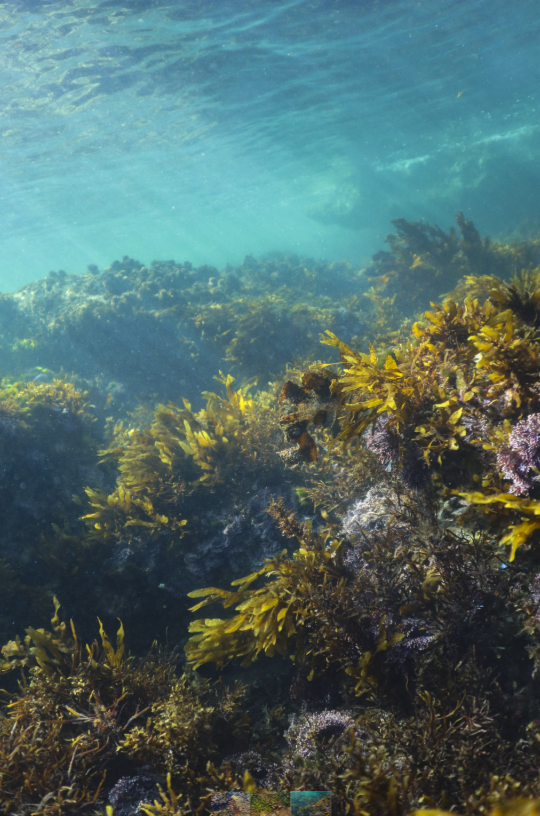
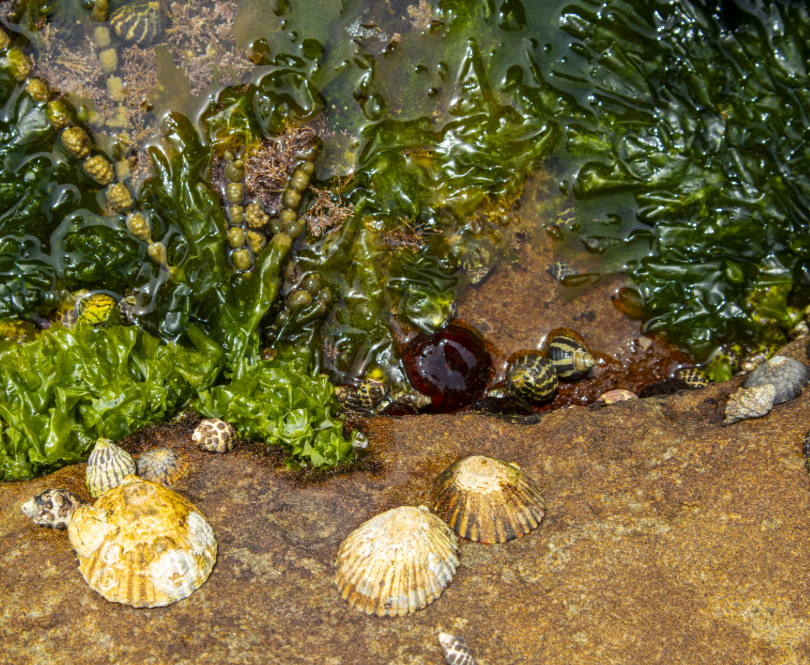
Get hands on and explore the incredible marine life found right on Sydney’s doorstep. Our interactive touch tank brings live rockpool creatures, along with coral, shells and other treasures from the reef, right to you. Learn how reefs are built over time and the geology that shapes them, as marine scientists guide you through the hidden world beneath the waves.
Blast Off! Experience the solar system with VR (Saturday & Sunday 12 – 4 pm)
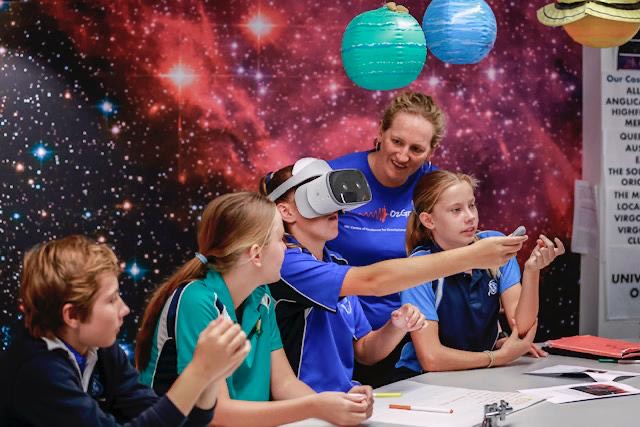
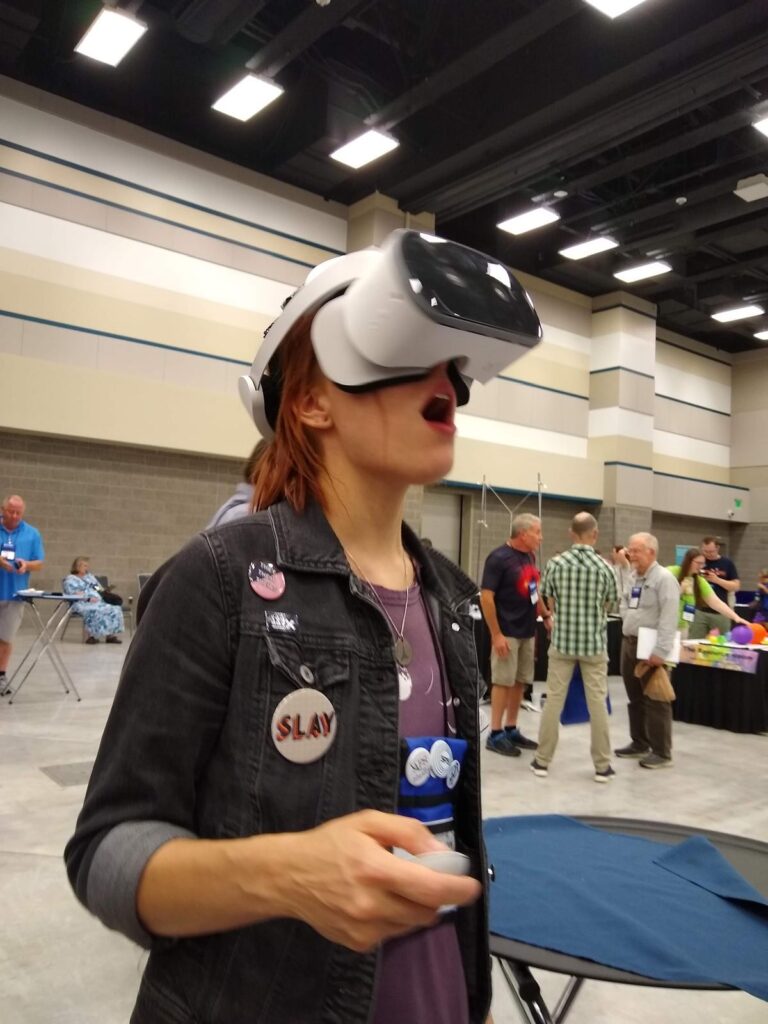
Take a trip out into the solar system and beyond in a virtual reality headset! OzGrav’s amazing VR system takes you to a virtual universe full of planets, stars, black holes and of course, gravitational waves! Visitors are guided by experienced scientists to the planets, stars, and far reaching galaxies to the most extreme objects in the universe.
Maths Craft Activities (Saturday & Sunday 12 – 4 pm)
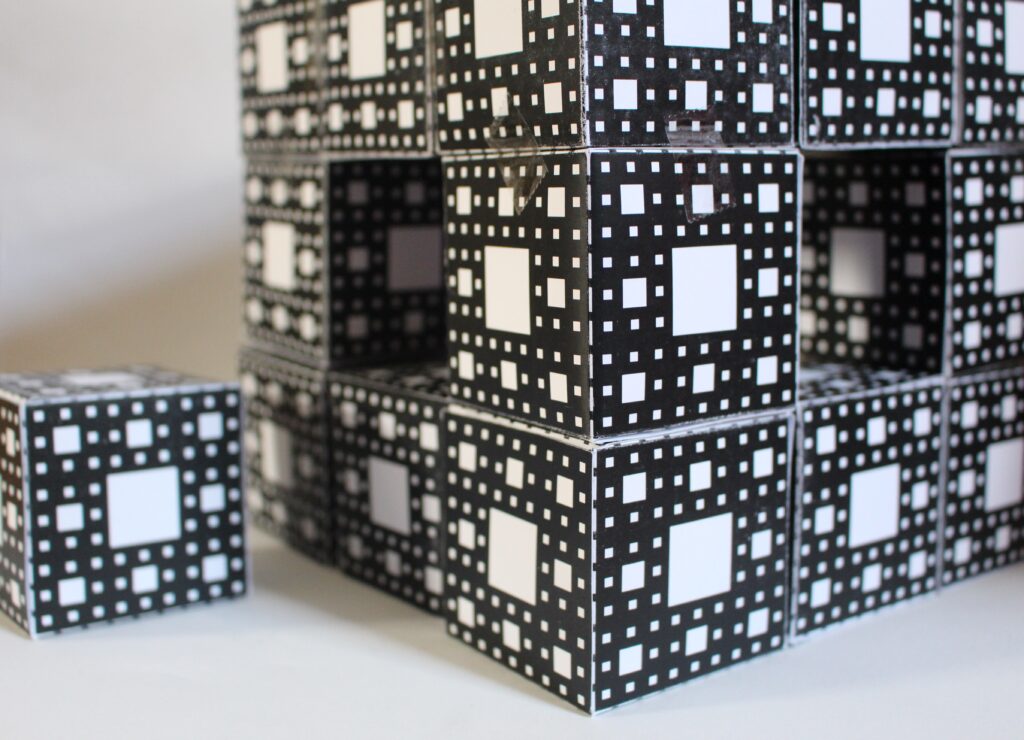
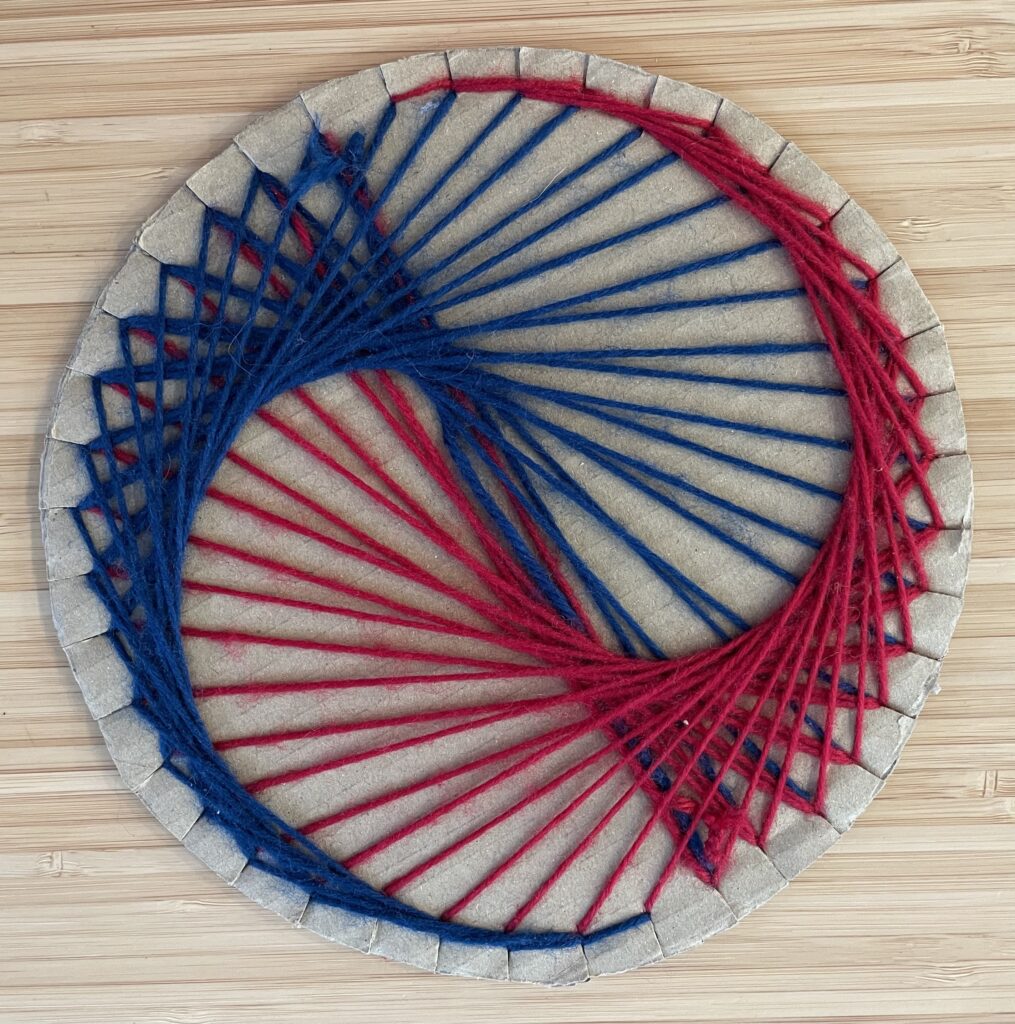
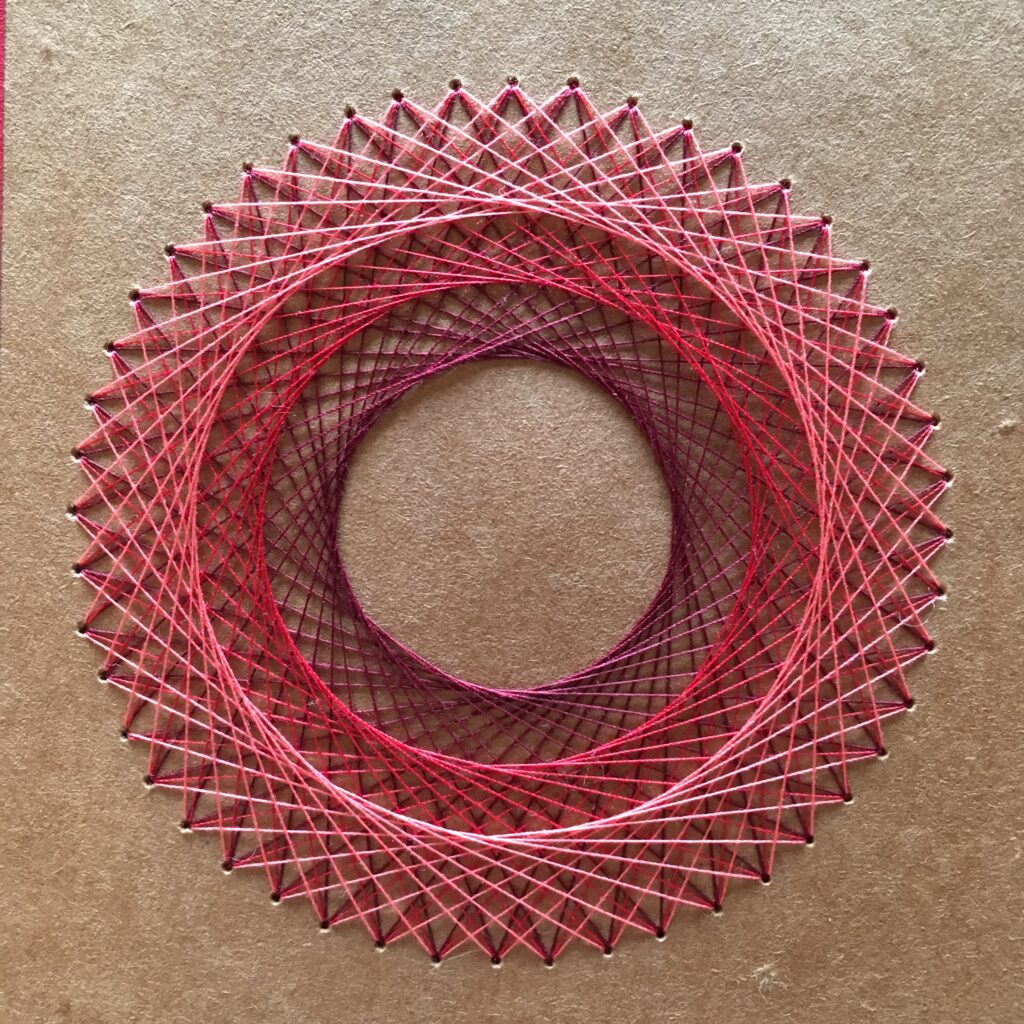
Get creative with a variety of maths craft activities – from making ‘origami fidget spinners’ to beautiful line art, and 3D-fractals, these activities use mathematical concepts to make interesting and beautiful works, many of which you can take home!
Drawing on Complexity with Briony Barr: Klein Bottle Experiment (Saturday & Sunday 12 – 4 pm)
Over the weekend, visitors will contribute to a collaborative artwork by Brisbane-based artist Briony Barr using paper and washi tape. This body of work, ‘Drawing on Complexity’ uses rule-based drawing and social dynamics to model complex adaptive systems, and has been designed in collaboration with physicist Andrew Melatos.
Key event details
Date & time:
Saturday 16 August & Sunday 17 August 2025
12 pm – 4 pm
Cost:
Free
Location:
The Chau Chak Wing Museum
University of Sydney, Camperdown Campus
